|
[Pg. 118]
The
following is an official list of Hamilton Postmasters from
the postoffice department at Washington, with their date of
appointment and time of service:
John Reily, August
2, 1804.
James B. Thomas, July 9, 1832.
James L,owes, March 27, 1851.
James K. Thomas, Jan. 19, 1853.
Lawrence M. Farrow, July 20, 1853.
Jacob Troutman, March 13, 1857.
William H. Blair, April 23, 1861.
William C. Rossman, July 23, 1S66. |
|
William H. Blair,
April 3, 1867.
John McKee, September 8, 1873.
Charles E. Giffen, Jan. 30, 1882.
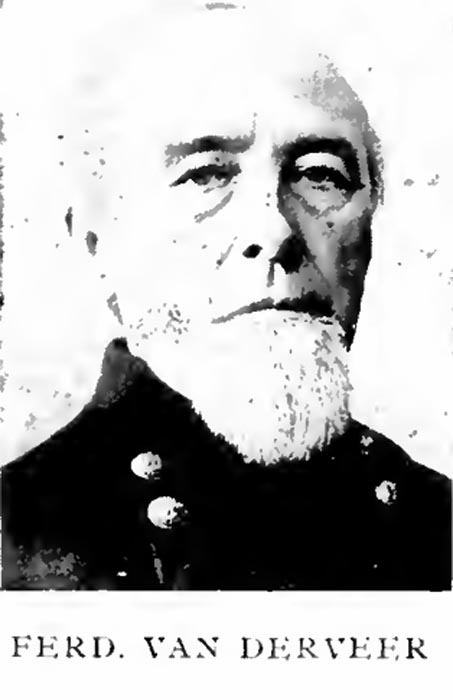
Ferd. Van Derveer, Mar. 18, 1886.
John E. Eohman, Dec. 4, 18S6.
Daniel H. Hensley, Mar. 20, 1890.
John E. Lohman, June 13, 1893. |
The
first postoffice was established in Hamilton in 1804, under
Thomas Jefferson's administration.
John Reily was appointed Postmaster. His
commission dated Aug. 2, 1804. which was signed by
Postmaster-General Gideon Granger. For many succeeding
years there was only one mail route through the Miami
Valley; this was weekly, being carried on horse back.
It left Cincinnati and passed through Hamilton, Franklin,
Dayton, Urbana, Yellow Springs, Lebanon, and thence back to
the starting point. This route was afterward reversed,
start-
[Pg. 119]
ing by way of Lebanon, and returning by way of Hamilton.
It is a fact not generally known to our people that
Hamilton's first Postoffice was located on Water street,
immediately south of the United Presbyterian church.
The building has been remodeled and used as a dwelling
house.
It was two stories high with a porch fronting on the
alley. John Reily occupied this building
as Clerk of the Courts, Recorder and Postmaster from 1804
until 1809. Later the postoffice was removed to the
corner of High and Second streets to a two story frame
building erected specially for that purpose, the first
permanent headquarters of the Postoffice. This
building was removed to Basin street, in April, 1853, where
it still remains and is used as a justice's court. The
building was framed by Captain Samuel Johnson, of
Black Bottom.
The next site used for Postoffice purposes was the room
now occupied by August Soehner, in the Miami
building; thence it was removed to the Universalist church
building; and from there to the room now occupied by The
Hamilton Daily Republican; and from there to its present
location, in the new Reily block, on the
identical spot where the first permanent Postoffice stood.
Below we give a brief biographical sketch of the Hamilton
Postmasters from 1804 to the present time.
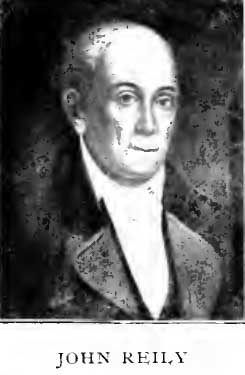
John Reily
JOHN
REILY - First Postmaster of Hamilton, was born in
Chester county, Pennsylvania, on April 10, 1763. In 1780, at
the age of 17, he enlisted in the Revolutionary army and
served in the southern department under General
Greene. Mr. Reily participated in
the battle of Guilford Court House, which took place on
March 15, 1781. His second engagement was that of
Camden. He also participated in the siege of the town
of Ninety-Six which begun on May 22, and was raised,
June 18. The last engagement in which Mr.
Reily took part was the memorable and hotly contested
battle of Eutaw Springs, South Carolina, on September 8,
1781.
Mr. Reily received a certificate of
honorable discharge at the expiration of his term of
enlistment, under the hand and seal of General
Washington. In 1783-84 he left his home in
[Pg. 120]
Virginia for
the wilds of Kentucky, where he made agricultural implements
for the settlers, and taught school during the last year of
his residence in the state. In 1789 he emigrated to
the Northwest Territory, locating at Columbia. Mr.
Reily was a member of a company of volunteers that
went to the rescue of Dunlap's station, on the Miami river,
near the village of Venice.
In 1790-91, John Reily and Francis
Dunlevy opened a school in Columbia, the former
taking the classical department, the latter the English.
This was the first school taught in the Miami country.
John Reily moved to Hamilton in 1803.
On March 24, of the same year, the legislature of Ohio, in
session at Chillicothe, passed "An act for the division of
the counties of Hamilton and Ross." Immediately
following the passage of this act Butler county was
organized, and John Reily was appointed clerk
of the supreme court of Butler county and retained the
office until May 3, 1842. He was the first Recorder of
Butler, resigning in 1811, when he was succeeded by James
Heaton. He held the office of commissioner's
clerk from 1803 to 1811. He watched the financial affairs of
the county with such wisdom and caution, that he was styled
the guardian of the people.
John Reily died at
Hamilton, June 7, 1850, aged 87 years. His funeral
took place on the 9th from the Presbyterian church,
conducted by Dr. William Davidson, of
the United Presbyterian church.
Judge Elijah Vance, a member of
the constitutional convention of Ohio, at that time in
session at the capital, on May 11th, announced the death of
John Reily and offered a series of resolutions
extolling the character and virtues of the deceased, which
were unanimously passed. A copy of the resolutions was
forwarded to the family of the deceased, accompanied by a
letter from W. Medill, president of the body, to
Mrs. Jane H. Campbell.
Source: Biographical & Historical Sketches - A
Narrative of Hamilton and Its Residents from 1792 to 1896 -
Publ. 1896 - Page 119
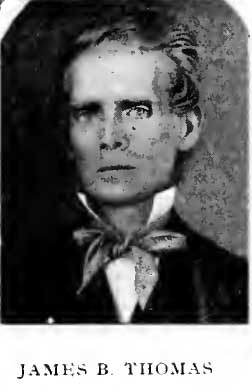
James B. Thomas
JAMES B. THOMAS
was born in Northumberland county, Pennsylvania, Sept. 8,
1792. He was appointed Post-
[Pg. 121]
tmaster by President Jackson July 9, 1832,
and so universal was the satisfaction he gave as a public
official to the community and the government that no
subsequent administration removed him. He held the
office until March 27, 1851, when he voluntarily resigned.
In the early days Hamilton was the distributing point
for Cincinnati mail matter going east and west, and the work
now performed in the railway mail car was then done in the
Hamilton postoffice. At this time there were no
express companies and all money had to be sent through the
mail. Jabez Fisher & Bros., of
Boston, heavy pork packers, located in Hamilton at the head
of the basin. They received their money in currency
from the East every few days in packages of $5,000, and so
regular were the mails on arrival they knew exactly when to
call for it.
Mr. Thomas was a carpenter by trade.
During the war of 1812 between America and England he helped
in the construction of the gallant Commodore Oliver Perry's
fleet, which was erected from the forests on Lake Erie.
Perry's noble victory of September 10, 1813, virtually
ended the war, when he wrote to General Harrison:
"We have met the enemy and they are ours."
In the winter of 1814, Mr. Thomas built a
flat boat in which he brought his mother's family from
Waterford, Pennsylvania, via the Ohio river to Cincinnati,
thence to Hamilton. During the next few years he made
a number of trips down the Ohio and Mississippi rivers from
Cincinnati, when the valley of the Mississippi was
comparatively a wilderness, encountering many dangers and
hardships. The return trips were made on foot and on
horseback, there being no steamboats in these early days.
Many political discussions were held in the "Old
Postoffice," participated in by Hon. Lewis D. Campbell,
Hon John B. Weller, Frank Stokes, editor of the Telegraph
and W. C. Howells, editor of the Intelligencer.
Mr. Howells was the father of W. D. Howells,
the author, now editor of the Atlantic Monthly.
[Pg. 122]
The charges for a limited number of postoffice boxes
for newspapers, city and county officials paid the rent of
the building. In early days the mail matter was distributed
from Mr. Thomas' hat. He would
frequently call upon Henry S. Earhart and others to
deliver a letter to immediate neighbors.
Stephen
Easton was clerk in the "Old Postoffice" and many
amusing incidents occurred during his term of service.
JAMES LOWES
was born in
Franklin county, Indiana, January 19, 1819. He married
Miss Martha J. Elliott, daughter of James E.
Elliott, in Hamilton, October 12, 1843, Rev.
Ebenezer Thomas, performing the ceremony.
Mr. Lowes engaged in the dry goods business with
David Taylor in Rossville in 1844. He was subsequently in
the pork packing business with David Taylor and
William J. Elliott, under the firm name of Taylor,
Lowes & Elliott. Mr. Lowes'
brother-in-law was Sheriff of Butler county for two terms.
James Lowes was appointed postmaster March 27,
1851, by Nathan K. Hall, Postmaster-General of the
United States. He executed his bond and took the oath
of office April 2, 1851. His commission and
appointment are among the many valuable and interesting
papers still in possession of his family at Indianapolis.
Source: Biographical & Historical Sketches - A
Narrative of Hamilton and Its Residents from 1792 to 1896 -
Publ. 1896 - Page 122
JAMES K. THOMAS. - Our
fourth Postmaster was born in Hamilton in 1831. He
received his education in the Hamilton public schools.
In 1852 he married Miss Harriet McMaken,
the second daughter of M. C. McMaken, Esq., of our
city.
Mr. Thomas for a number of years was
engaged in the milling business in the old Erwin mill
at the east end of the suspension bridge. After severing
connection with his brother Alfred, he and Charles
Wardlow organized the Wardlow-Thomas Paper
Co., of Middletown, for the manufacture of flour sacks and
manilla papers. The company begun operation on a small
scale, but by untiring industry, coupled with good bisiness
methods, succeeded in making it a financial success.
The first mill was built in 1868, and burned down in
September, 1872. A new building was erected in 1880.
The
[Pg. 123]
main building is 460 feet long and 86 feet
wide. Its capacity is 20,000 pounds per day.
In religion Mr. Thomas is a Presbyterian, and an
elder of the First Presbyterian church of Middletown.
He is always ready to do a good act for his fellow man; is
an enterprising citizen in every thing that appertains to
the advancement
of Middletown.
Source: Biographical & Historical Sketches - A
Narrative of Hamilton and Its Residents from 1792 to 1896 -
Publ. 1896 - Page 122
LAWRENCE M.
FARROW - Hamilton's fifth Postmaster, was born in St.
Paris, Champaign county, Ohio, November 25, 1829. He
received an excellent education and at an early age entered
the law office of Samuel Shellabarger and
James M. Hunt, of Springfield, Ohio, as a student.
After completing his law course, he and Judge Hume
removed to Hamilton in the fall of 1852 and opened a law
office, known as Hume & Farrow, and continued
his chosen profession until July 29, 1853, when he was
appointed Postmaster by President Franklin
Pierce, and served until March 13, 1857, when he was
succeeded by Jacob Troutman. Mr.
Farrow was a man of delicate constitution. The
close confinement in the postoffice impaired his health, and
he returned to St. Paris, where he resided with his father
until his death, which occurred in 1859, from consumption.
Source: Biographical & Historical Sketches - A
Narrative of Hamilton and Its Residents from 1792 to 1896 -
Publ. 1896 - Page 123
JACOB TROUTMAN
- Was born July
22, 1824, on the homestead farm in St. Clair township, two
miles south of Hamilton. He attended school in the old
Reiley district until he arrived at the age of
seventeen years, when he moved to Rossville, now the First
ward of the city of Hamilton, and entered the public schools
of that village, where he continued his studies for four
years and at the age of twenty-one years was elected city
marshal of the town of Rossville. Mr.
Troutman was a brainy, intelligent, self-made man.
In his friendships he was ardent and unchangeable; in his
dislikes he was very pronounced. As a public official
he performed his duty without fear and favor. He stood
for sheriff of Butler county on several occasions, but each
time was defeated by the small fry professional politicians
of his party, who feared him for his honesty as he could not
be used by them. Mr. Troutman
[Pg. 124]
was
appointed Postmaster of Hamilton, Mar. 13, 1857, under
President Buchanan's administration, and served
until Apr. 23, 1861. He gave good satisfaction to the
patrons of the office. He was a member of the city
council from the First ward for a number of years and filled
the position with honor to himself and credit to his
constituents. He died Nov.14, 1889, and was
buried by the Masonic order of which he was a bright,
advanced and honored member.
Source: Biographical & Historical Sketches - A
Narrative of Hamilton and Its Residents from 1792 to 1896 -
Publ. 1896 - Page 123
WILLIAM
H. BLAIR - Was born in Hamilton, February 14, 1818.
His birth place was the Blair homestead, situated on
Water, near Market street, on the site now occupied by the
old Black & Clawson Co. building. He was
educated in our public schools. He was commissioned
Postmaster of Hamilton by President Lincoln
April 23, 1861, and served continuously except a short
interval, until 1873. Mr. Blair was a
genial, accommodating and popular official, and gave our
citizens an excellent mail service. His death occurred
February 27, 1887. Charles Potter was Mr.
Blair's efficient Assistant Postmaster.
Source: Biographical & Historical Sketches - A
Narrative of Hamilton and Its Residents from 1792 to 1896 -
Publ. 1896 - Page 124
W. C. ROSSMAN,
was born in Eaton, Ohio, July 30, 1835. At an early age he
entered the dry goods store of J. & T. E. Rossman -
uncle and brother - in Rossville as salesman, and remained
in the store until the Civil War begun when he organized the
"Hamilton Guards." This was one of the earliest
companies raised. It was attached to the Third Ohio
infantry, and known as Company "F." Isaac Morrow
was its colonel; John Beatty,
lieutenant-colonel; J. Warren Keifer, major.
The regiment was assigned to the Eastern department, and
participated in the fight at Elkwater Junction, Va.,
September 11, 1861, in which engagement the rebel, Col.
John A. Washington, was killed. Gen. Lee
was the commander of the Confederate forces in this battle.
On November 28th, the regiment was ordered to Kentucky, when
Col. Morrow resigned and John Beatty,
of Columbus, was promoted to the colonelcy.
On April 7, 1863, the Third was detached from the army
proper, and in company with the Fifty-first and
Seventy-third Indiana, Eightieth Illinois and two companies
of the First Hamilton and its Residents. 125
[Pg. 125]
Alabama. This command was under Col. A. D. Streight,
and immediately started out on what is familiarly known as
"Streight's raid." The command was first dispatched to
destroy the Rome Iron works, the foundries and arsenals.
Later on the entire brigade was captured by Gen.
Forrest and sent to Belle Isle, and from there to Libby
prison. The officers were held, but the men were
paroled.
After eighteen months' confinement Capt.
Rossman, with a number of other officers, made their
escape from the prison through a tunnel. They were persued
by rebel blood hounds, captured and returned to Libby, where
they were kept until near the close of the rebellion.
"Sparta knew the names of the men lost in the cause of
Thermoplyae," but we will never know how many of our noble
defenders perished in rebel prison pens. After Capt.
Rossman's release from Libby he returned to Hamilton,
broken in health, and was appointed postmaster of Hamilton,
July 23, 1866. He was not an applicant for the
position, but was held in high esteem by the late Col. L.
D. Campbell, who recommended him to President
Johnson, and his name was sent to the senate for
confirmation, but was not acted upon for several months,
owing to the fact that Andrew Johnson and the
senate were antagonistic to each other. Capt.
Rossman was finally confirmed, but alas, too late, for
he was dead.
Long confinement and cruel treatment had done the work,
and on July 11, 1867, at the residence of Judge
Gilmore, in Eaton, the spirit of Capt. Rossman
returned to its maker. He was a noble patriot and will
long be remembered as one of "Our Honored Dead."
Source: Biographical & Historical Sketches - A
Narrative of Hamilton and Its Residents from 1792 to 1896 -
Publ. 1896 - Page 124
JOHN McKEE
- Was born
in Kentucky, February 20, 1829. His parents
emigrated to Butler county in 1844. He was married
to Sarah J. Beckett, daughter of Mr.
Robert Beckett, September 24, 1861. Three
children were born from this union.
Mr. McKee was reared on a farm, but taught
school for a period of six years, before entering the
army. He graduated from Williams college in 1855.
[Pg. 126]
At the breaking out of the Civil War Mr.
McKee was commissioned captain of Company K,
Thirty-seventh Indiana volunteers. He was severely
wounded at the battle of Stone River, December 31, 1862,
and was sent home on a furlough. Afterward, being
unfit for active duty, he resigned, having served his
country well for two years. Capt. McKee
refused to accept pay from the time he was wounded until
his resignation was accepted, claiming that he was not
entitled to it, having rendered no actual service during
the time.
Capt. McKee was appointed Postmaster
September 8, 1873, and served for eight years. At
the time he was commissioned,
he was drawing a pension, and immediately asked for the
cancellation of his certificate and turned the money
that had accrued on same into the United States
treasury. Here we have a true illustration of
John McKee's
character, moral excellence and conscientiousness.
John E. Heiser was Capt.
McKee's able assistant, and rendered the community
valuable service.
Source: Biographical & Historical Sketches - A
Narrative of Hamilton and Its Residents from 1792 to
1896 - Publ. 1896 - Page 125
CHARLES
E. GIFFEN was born in Hamilton, Jan. 15, 1843.
He received a liberal education in our public schools and
elsewhere. After leaving school he was employed as
book keeper in the office of J. S. & S. Giffen,
lumber merchants on Basin street.
The subject of this sketch married Miss Celia
Robertson, eldest daughter of Isaac Robertson,
Esq., Oct. 10, 1867. Two sons, Robert and
Stanley, were born from this union. Early in the war
Charles E. Giffen enlisted in Company I, Fifth Ohio
cavalry. He participated in the. battles of Shiloh,
the siege of Corinth, and was with the army of the
Tennessee, in all of its engagements and marched with "Sherman
to the Sea." After the dismissal of Capt. Clem.
Murphy from the service, Lieutenant Charles H. Murray
was promoted to the office of Captain, and Charles E.
Giffen became first lieutenant. He was a strict
disciplinarian, but was well liked by the boys under him.
After his return from the scenes of war he embarked in
the lumber business on North Front street, where he was
quite
[Pg. 127]
successful, and continued in the
business until the time of his
appointment as Postmaster, Jan. 30, 1882. In this
position he gave universal satisfaction. Mr.
Giffen died Oct. 29, 1889.
James W. Moore was Mr. Giffen's
valuable Assistant Postmaster.
Source:
Biographical & Historical Sketches - A Narrative of Hamilton
and Its Residents from 1792 to 1896 - Publ. 1896 - Page 126
Ferd. Van Derveer
FERDINAND VAN DERVEER.—[See
Hamilton in Civil War.]Source: Biographical &
Historical Sketches - A Narrative of Hamilton and Its
Residents from 1792 to 1896 - Publ. 1896 - Page 127
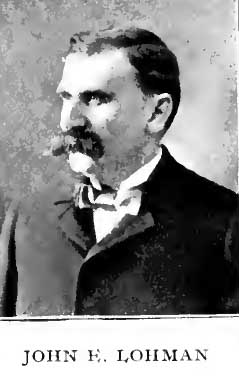
John E. Lohman
JOHN E. LOHMAN, was born in
Hamilton, May 6, 1854.
He is the son of J. W. Lohman, who emigrated from Germany
in 1830, and located in Hamilton, where he resided up to the
time of his death. John E. Lohman was educated in our
public
schools. After leaving school he learned the carriage
trade, which he followed until he took the road for a large
well
known and popular carriage manufactory of the Queen City.
Mr. Lohman was, for two terms, a member of the board of
education,
from the First ward. He was appointed Postmaster
of Hamilton, December 4, 1886, and held the office until
March 20, 1890, when President Harrison appointed
D. H.
Hensley. It was under Mr. Lohman's administration that the
delivery system was instituted in Hamilton. Good
organization
and thorough discipline, made a success of the free delivery
system, hence Mr. Lohman's popularity as a Postmaster.
Democrats, and Republicans alike pronounce his first
administration
a complete success. Assistant Postmaster Fred.
Schorr rendered valuable aid to his superior in the
discharge
of his duties. Mr. Lohman was re-appointed Postmaster, June
13, 1893. This fact demonstrates his popularity.
He is Postmaster for the people; is always endeavoring to
afford better mail facilities for the public.
Henry Hammerle, Assistant Postmaster, and Miss
Beppa Caldwell are his able assistants.
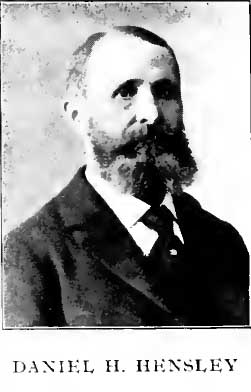
Daniel H. Hensley
DANIEL H. HENSLEY
was born in Logansport, Ind., January 10, 1844, where he
received a liberal education. On July 21, 1862, at the
age of eighteen, he entered the army, enlisting in Company
H, Seventy-third Indiana volunteers, Col. Gilbert
Hathaway's regiment, which was in active service for
three years, being mustered out July 1, 1865. In the
[Pg. 128]
spring of 1863, during the darkest hours of the
rebellion, this regiment was one of four picked regiments,
composing the "Independent Provisional Brigade," under the
command of the famous Col. A. D. Streight. On April
7, 1863, this brigade left Murfreesboro, Tennessee, under
sealed orders for the interior of the Confederacy.
After a month's hard riding, much of the time day and night,
with frequent severe fighting the brigade was compelled to
surrender to Major-General Forrest May
3, 1863, near Rome, Ga. After a short confinement on
Belle Isle the rank and file were exchanged and sent North.
The officers were confined in Libby Prison, and the brigade
was without a commander. The privates were assigned to
other organizations. Sergeant Hensley
was placed in the Twelfth Indiana battery, serving until the
spring of 1864, when he was detached for special service at
Gen. Hooker's headquarters, then in the
Lookout valley. A few of the regimental officers
having escaped from Libby through the famous tunnel, the
regiment was reorganized in the summer of 1864, and
Sergeant Hensley rejoined his old command.
He located in Hamilton in 1866, where he taught school
for about one year. Afterward he removed to New
Albany, Ind., and followed the profession of teaching for a
short time. He returned to Hamilton in 1867, where he
was married. He was Secretary and Collector for the
Hamilton Gas Light and Coke Co., for a period of twenty
years. Mr. Hensley was appointed
Postmaster March 20, 1890, and served until June 13, 1893,
when he was removed by President Cleveland and
John E. Lohman appointed. As an official Mr.
Hensley was always painstaking, courteous and
accommodating, thereby giving the public excellent service.
Source: Biographical & Historical
Sketches - A Narrative of Hamilton and Its Residents from
1792 to 1896 - Publ. 1896 - Page 127
Portrait between pps. 120 & 121
POSTMASTERS OF
ROSSVILLE.
Joseph Wilson, Nov.
24, 1819.
Dr. R. B. Millikin, Sept. 2, 1824
Jacob Matthias, Sept. 21, 1836
Sam'l. G. Sweeney, Mar. 8, 1837
Samuel Millikin, Mar. 29, 1839. |
Levi P. Richmond, May
1, 1844
Joseph Curtis, May 29, 1849
George Longfellow, Apr. 14, 1853
Robert Hargitt, Dec. 10, 1853.* |
-------------------------
* Postoffice discontinued Apr. 19, 1855.
[Pg. 129]
JOSEPH
WILSON, came West from Newark, New Jersey, in 1811,
and located in Rossville. He carried on a general
merchandise store. The record of this house, covering
a period embracing twenty- five years, comprising a part of
the history of Rossville, was one of uniform reliability and
fairness of dealing, and it enjoyed a steady and prosperous
trade and a deservedly high place in public confidence.
Mr. Wilson's store was an old frame building on
the northwest corner of Main and B streets, where the
Rumple building now stands. In 18 17 he married a
daughter of Samuel Dick, of Ross township, who
died in 1846.
In 1819 he was appointed Postmaster, serving until
1824. After the death of his wife, in 1829, he
returned to the East where he died in 1859.
Source: Biographical & Historical Sketches - A
Narrative of Hamilton and Its Residents from 1792 to 1896 -
Publ. 1896 - Page 129,
DR.
ROBERT B. MILLIKIN, was born, on December 9, 1793.
At the time of the exodus of his three brothers from their
home in Washington county, Pennsylvania, in 1807, he was
only in his fourteenth year. He remained with his parents
till the spring of 1813, when the spirit of emigration got
the mastery, and constrained him to follow the examples of
his brothers. Upon his arrival in Hamilton he became a
member of his brother's family, where he resided until his
marriage.
A short time after his arrival in Rossville, he began
to study such branches of education as would fit him for the
practice of medicine. The facilities for acquiring a
good education were very few. He availed himself of
such as existed and, after a year's time, began the study of
medicine. The year of 1817 was full of interesting
events for Robert B. Millikin. He was licensed
to practice his profession, likewise he had taken unto
himself a wife, commenced housekeeping and opened an office.
Dr. Millikin was married December 16,
1816, to Sarah Gray, who was related to many
pioneer families. They had three children. Samuel
Millikin, the first son, was born in 1817. Thomas
Millikin, a noted lawyer of this city, was born
September 28, 1819. He married Mary VanHook.
Elizabeth
[Pg. 130]
Millikin married William A.
Elliott, son of Arthur W. Elliott, who died in
1881.
After Dr. Robert B. Millikin began the practice
of medicine he devoted himself earnestly to his work.
After many years practice, strict attention to all his
interests and the acquisition of property gave him a
comparatively independent position. He conducted a
drug store in Rossville, now the
First ward of Hamilton. He was general of militia, a
trustee of Miami university and a member of the legislature
of Ohio.
He was appointed Treasurer of the county to fill the
vacancy in that office caused by the defalcation of an
ex-treasurer. Dr. Millikin died June 28,
1860.
JACOB
MATTHIAS was born October 21, 1802, at Winchester,
Virginia. While young he learned the trade of a
coppersmith and in the fall of 1827 emigrated to Cincinnati,
remaining there a year. He was married March 27, 1820,
to Emily W. Grooms. Eight children resulted
from this union. When he first came to Ohio he made a
journey to Rossville on foot, returning in the same manner.
He and his brother Isaac came to Rossville in
1828 and organized the firm of I. and J. Matthias,
engaging in the coppersmith business, later adding the stove
and tinware trade.
Jacob Matthias was a member of the firm
of Matthias, Kline & Resor, conducting
a general store in Rossville.
Mrs. Matthias died in 1845, and on April
23, he married Ann M. James, daughter of Barton
James, one of the pioneers of Hanover township, where
he settled in 1817. Jacob Matthias was
in the state legislature in 1837- 1838; was a member of City
Council, School Board and also an Infirmary Director.
He was an influential citizen and a consistent member of the
Universalist church. He died August 21, 1877, at New
Paris, Preble county.
Source: Biographical & Historical Sketches - A
Narrative of Hamilton and Its Residents from 1792 to 1896 -
Publ. 1896 - Page 130
SAMUEL
G. SWEENEY clerked in the iron store of John
Winton, situated on the north side of Main street,
between A and B streets. Subsequently he purchased the
store and was appointed Postmaster, serving from March 2,
1837, until March 29, 1839. He was a member of the
"Butler Guards," a
[Pg. 131]
crack military company commanded by the late Col. L. D. Campbell. Mr. Sweeney remained
a bachelor during his life time. His business was
conducted upon thorough and accurate methods, and the
knowledge of the business possessed by him in dealing, and
his fairness in all transactions commended him in an eminent
degree to the favor and confidence of the trade. No
one knows where he removed to, or the date of his death.
Source: Biographical & Historical Sketches - A
Narrative of Hamilton and Its Residents from 1792 to 1896 -
Publ. 1896 - Page 130
SAMUEL MILLIKIN was born in 1817.
He received his education in the private schools of Hamilton
and Rossville. At the age of 25 years he married
Miss Mary Halsted. Three children resulted from
this union; Miss Helen
married Charles M. Miller and Miss Lizzie
married a man by the name of Raynor. Both of his
daughters, with their husbands, reside in Chicago.
William H. Millikin, his only son, resides on South
Eighth street in this city. For years Samuel
Millikin, from his quarry at the south end of C street,
furnished all the building stone used in Hamilton and
Rossville. He was appointed Postmaster in 1839.
At the breaking out of the late Civil War, he enlisted in
Company A, 26th O. V. I. and served until the close of the
war. He had a good record as a soldier. After
his return from the scenes of carnage, he immigrated to
Missouri, and settled on a farm about seventy miles west of
St. Joseph. He was Postmaster from May 1, 1844, until
May 29, 1849. He died in 1895.
LEVI P. RICHMOND
was born January 29, 1805, in Ross township, this county,
and was in his forty-fifth year when he died. On
December 4, 1823, he married Martha Powers
Akers. Six children resulted from this union.
Nearly all his life was spent where he was born. From
April 1835, until October, 1841, he resided in Millville,
when he removed to Rossville where he continued to reside up
to the time of his death.
JOSEPH CURTIS was born in
Liberty township in 1819, on the farm afterward owned by the
late Hon. Christopher Hughes. He
attended the country schools of his day and received as
liberal an education as was obtainable at that time.
[Pg. 132]
For several years he and his brother, the
late Stephen V.
Curtis, were employed at their father's distillery.
Subsequently he opened a general merchandise store in the
township of his nativity. He carried an immense and
diversified stock and sold largely to the surrounding
country. His ample means and well known business
capacity made success sure in his new venture. In
1846, he came to Rossville and opened a large dry goods
store on Main street. Later he sold out to N. G.
Curtis. In 1850, he and Jacob Shaffer
organized a private bank in the room now occupied by
Charles Diefenbach, as a jewelry store, on High
street, opposite the court house. Russel
Potter, of Memphis, Tenn. , was admitted to the firm in
1857. Fine, commodious quarters were fitted up for the
new banking firm of Shaffer, Curtis &
Potter in the Beckett building. Success
crowned their efforts until the national banking system
superceded the private banks. Joseph Curtis
was Postmaster from May 29, 1849, to April 14, 1853.
He died September 27, 1885.
GEORGE LONGFELLOW
- The oldest son of Badgar Longfellow, was
born in St. Clair township on the Four Mile creek, September
12, 1833. The farm is now owned by John Betz.
He was educated in the country schools and served, as
constable of St. Clair township several terms.
When war was declared between the United States and
Mexico he enlisted in John B. Weller's company and
served until its close. After his return he conducted
a grocery in the Odd Fellow building, corner of Main and B
streets. On April 14, 1853, he was appointed
Postmaster of Rossville. In 1858 he removed to Kokomo,
Indiana, and engaged in a general merchandise store. He died
about two years ago. Gary Longfellow was
the Assistant Postmaster.
ROBERT
HARGITT was a native of Yorkshire, England, and came
to this country, when a boy, with his parents. They
settled in Lawrenceburg, Dearborn county, Indiana.
In 1851 he came to Ohio and established the first news
depot in Hamilton. He was the first mayor of the
consoli-
[Pg. 133]
dated villages of Hamilton and Rossville. He
was justice of the peace for several years.
Of his family of eight children only two survive.
A few years ago he was killed by being run down by a
passenger train at Cumminsville. He was Mayor of the
village of Rossville from December 10, 1853 to April 19,
1854, when the villages of Rossville and Hamilton were
united.
|