|
OHIO GENEALOGY EXPRESS

A Part of Genealogy
Express
|
Welcome to
Richland County,
Ohio
History & Genealogy
|

|
BIOGRAPHIES
 Source
Centennial Biographical History
of Richland Co., Ohio
Illustrated
By A. J. Baughman, Editor
Published Chicago - The Lewis Publishing Co.
1901
<
CLICK HERE TO RETURN
TO 1901 BIOGRAPHICAL INDEX >
< CLICK HERE TO RETURN
TO LIST OF BIOGRAPHIUCAL INDEXES >
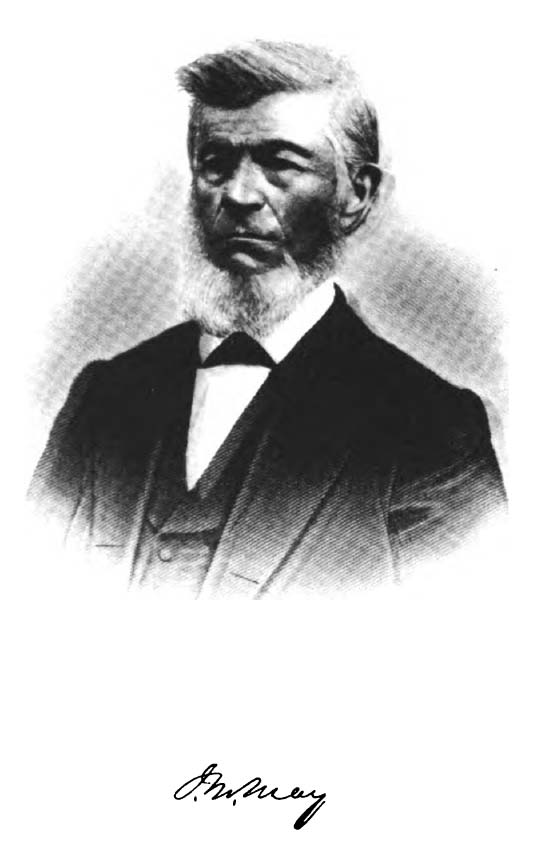
John M. May |
|
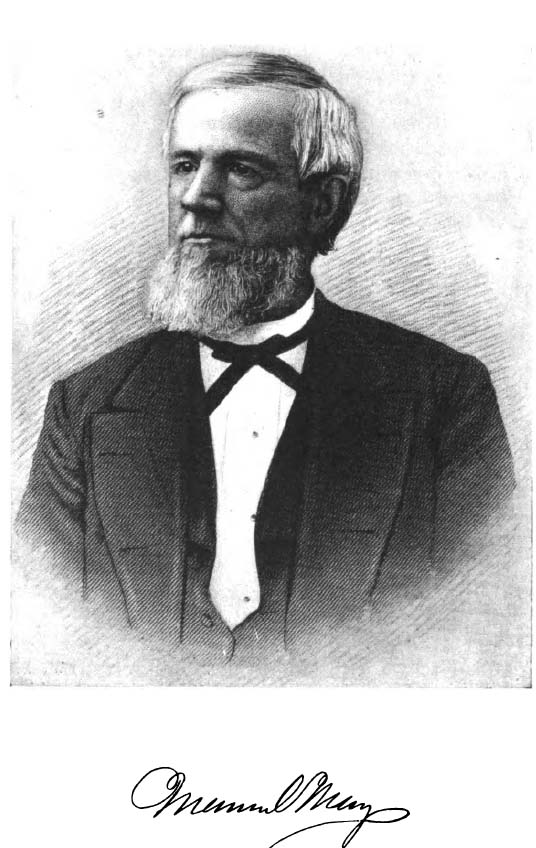
Judge Manuel May |
|
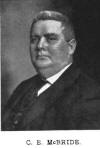
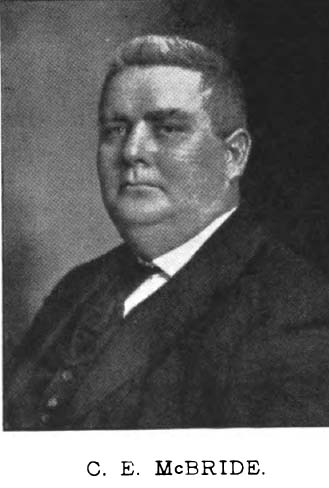
C. E. McBride |
|
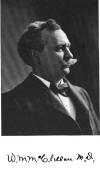
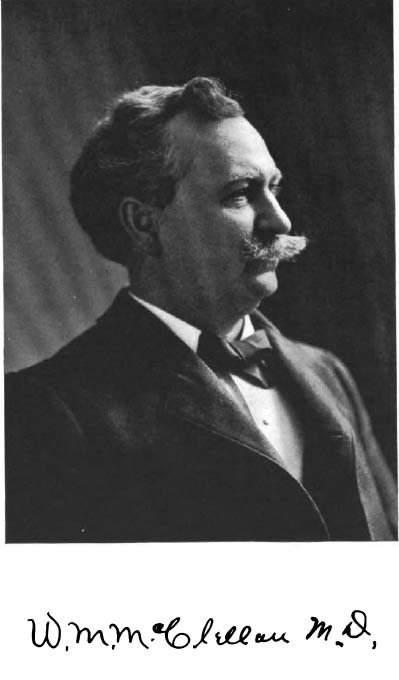
W. M. McClellan |
|

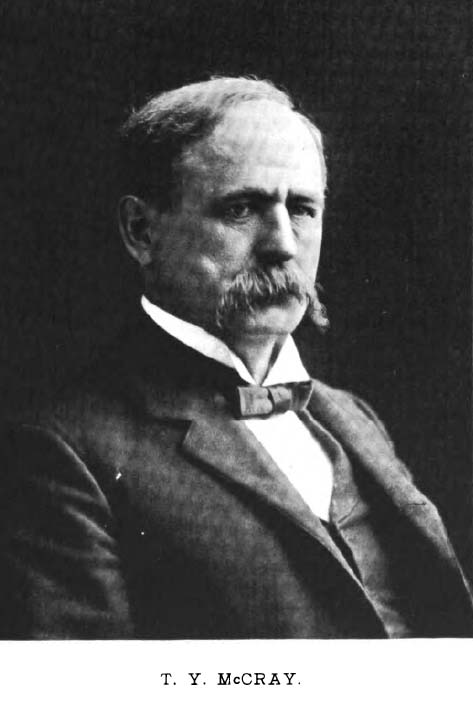
T. Y. McCray |
|
| |
0.
John Walter McConkie, teacher, politician, journalist and
insurance solicitor, is the second and eldest living son of
William and Rebecca McConkie. He was born in
Worthington township. Richland county, Ohio, Apr. 24, 1864.
As a youth he was quite reserved and did not give much promise
of future greatness, nor did he seem especially devoted to
study, but later he developed a strong inclination for books and
for learning and for a time was ambitions to become a student at
the University of Michigan. During this time he cultivated
a love for political history almost marvelous in that it
prompted such wide and comprehensive reading of subjects bearing
upon that department of knowledge. He is often to-day
consulted upon various points at issue. Language, too, was
most carefully studied then. as now, and word analysis, which
goes to the origin of words, still finds great favor with him.
At one time he and Professor J. W. Scott, now of
Colorado Springs. Colorado, stood highest in orthography of all
teachers then employed in Ashland county, and that, too, at an
examination that passed the critical eye of Professor J. E.
Stubbs, whose success has since made him famous in the
educational world. Mr. McConkie's devotion and
close application to study often led him to pore over his books
until the small hours of night, and this, in addition to the
physical strength required to cultivate and conduct his father's
farm (adorned with a log house ripe with age, located by the
roadside over which it is said passed a section of General
William Henry Harrison's army in his remarkable campaign
against the Indians) told upon the then strong and vigorous
young man and resulted in severe sickness in 1882 and again in a
milder form in 1883.
After his recovery, in 1884, having been weakened
physically to a considerable extent by a severe attack of
inflammatory rheumatism that he had suffered in connection with
other ailments which involved the liver and stomach, he
concluded to turn his attention more fully to learning: so, in
connection with James M. Reed, now prominent at the
Mansfield bar, and Charlie L. McClellan, deputy clerk of
courts for Richland county, he entered Greentown Academy, at
Perrysville, where not a few young men and women have found
inspiration and hope that have led on and on to higher and
broader fields. After a year's study at that institution
he began teaching, and at intervals during his academic course
he taught in Ashland and Richland counties. In 1889, when
Professor Lycurgus L. Ford severed his connection with the
above institution by reason of its failure to adopt the more
advanced methods of the time, Mr. McKonkie
promptly sided with that gentleman, who has since grown
prominent, and headed a paper strongly testifying to the
Professor's worth and ability,— a paper which is still held in
grateful appreciation.
Later in the year Mr. McConkie was offered and
accepted a position in the public schools of Iowa, and in
October he left for that state. where he was granted a
first-class teacher's certificate, that he values most highly.
There he first observed the practical workings of female
suffrage in school affairs. He served successfully under
the superintendency of Mrs. A. N. Filson, whose personal
ability and worth won for her a third election as the county
superintendent in a Democratic county, while she was a
Republican. Higher in authority at the state capitol was
that noted educator. Henry Sabin,
introducing model methods that have since grown very popular and
have been widely adopted. During this period and under
such inspiration Mr. McConkie was prominent in
institute work, and he speaks in enthusiastic terms of praise of
those with whom he was thus associated, and particularly of the
deceased Miss Dora B. Johnston, who ranked high at
college and occupied an enviable position in both intellectual
and social circles.
Later, when the economical era was manifest in the
Hawkeye state and made itself felt among Iowa teachers laboring
for the advancement and growth of its people to an extent not
usually appreciated, Mr. McConkie, in connection with
L. M. Gerhard, now of South Dakota, and others, left the
state. Returning to Ohio, he launched boldly in the field
of politics, opposing the “tariff reform“ ideas of Grover
Cleveland, and during the campaign of 1888 he supported
most earnestly and enthusiastically the candidacy of Benjamin
Harrison, for whom he entertained a most friendly feeling.
In 1889 he again took up teaching, being employed in Knox
county, Ohio. In 1890 he was associated with the work of
the eleventh census and imbibed somewhat the statistical
admiration possessed by Robert P. Porter, then the
superintendent of the census.
In 1891 Mr. McConkie again put on the political
armor, and as a memher of the county central and executive
committees he zealously and earnestly supported William
McKinley, who was then the Republican candidate for
governor. That this work was effective, is attested by the
fact that his precinct at that election showed a net Republican
gain of fifty-six. Later, when an attempt was made to
lessen the victory by dethroning John Sherman and
place B. Foraker in the senate of the United States, he
did not hesitate to take sides with the great statesman from
Mansfield, who was so prominently identified with the financial
history of the United States and of the world. With voice
and pen he insisted most firmly that honor demanded the
re-election of Mr. Sherman and he championed his
cause with others in a public speech in the Memorial Opera House
in Mansfield, where the friends and neighbors of Senator
Sherman met to resent the charge advanced by W. S.
Cappeller and others that he was unpopular at home.
The following year, having brought himself to the
favorable attention of William M. Hahn, the chairman of
the Ohio Republican state executive committee and a resident of
Richland county—where politics have always taken a deep root—as
well as Senator Sherman. Frank W. Pierson,
the chairman of the local committee. Captain W. S.
Bradford and others prominent and influential, he was made a
delegate to the Republican state convention that assembled in
Cleveland. During this convention. presided over by
William McKinley. now twice chosen the chief magistrate of
the nation, he successfully widened his acquaintance.
Among fast friendships there formed was one with L. C. Laylin,
now the secretary of state. Mr. Laylin at
that time being a delegate from Huron county. Three times
in presidential years has Mr. McConkie been chosen to
represent his native county in state conventions.
In 1893 he taught again in Knox county, near
Fredericktown, where ex-Secretary of the Treasury William
Windom spent a part of his early manhood, and it was
understood that his devotion to politics would bring a state
appointment from Governor Mckinley; but it was decreed
otherwise. In 1894 he was invited and accepted a place
with the Republican state executive committee, then as now under
the leadership of Charles Dick, and participated actively
in the contest that resulted in the re-election of Samuel M.
Taylor by one hundred and thirty-seven thousand and
eighty-six, the largest plurality ever recorded in Ohio.
That his services were appreciated during this memorable contest
is evident from the strong letter in his possession from
Chairman Dick, testifying to his zeal, industry and
capability.
Previous to this, in the campaign of 1893, Mr.
McConkie wrote much in support of the Republican party and
often have articles from his pen found places in the New York
Tribune, Philadelphia Press, Cleveland Leader, Ohio State
Journal and the American Economist. The latter, strong and
uncompromising in its support of the policy of protection, then
as to-day, lifting up the hands of William McKinley
in the bitter struggle for supremacy. sent out inquiries to
leading Republicans asking “Why William McKinley
should be re-elected governor of Ohio?” Among those consulted in
the Buckeye state was J. W. McConkie, of Richland county,
and at the head of the list of those replies we find his
ringing, earnest words; and when the future political historian
glances over the pages of that noted publication for words of
inspiration as he writes the life of William McKinley he
will see as many as three articles from the pen of Mr.
McConkie in one issue. Later the subject of this
sketch branched still more strongly into journalism and the list
of articles extant from his pen is now a long one.
Mr. McConkie possesses great command of the
English language, and often his articles along political lines
are pointed to a remarkable degree. In 1896 William
McKinley, under the leadership of Marcus A. Hanna,
having won the nomination for president over strong and powerful
combinations, there was presented a campaign of unusual
activity. Mr. Hanna being in charge of the
Republican end, with William M. Hahn, of Mansfield, for
the second time in control of the speakers‘ bureau. Mr.
McConkie was invited into a broader field and
participated somewhat in the contest that resulted in a signal
Republican victory. It was quite generally believed that
Mr. McConkie would receive recognition by the
national administration. but to the disappointment of his
friends he was forgotten; and when advancement seemed probable
in the census bureau Congressman W. S. Kerr, whom he had
supported and helped into public life, stood in the way while
professing warmest friendship. This form of conduct
extended in other directions, operating often to the detriment
of those worthy and deserving; and this, together with the
selfish, grasping nature developed, led to the defeat of Mr.
Kerr in the convention that followed. President
McKinley having been renominated at Philadelphia, and
Marcus A. Hanna, whom Mr. McConkie had supported with
pen and might in the ever memorable Ohio senatorial contest of
1897-8 that sustained, as he believes, the honor of the
Republican party and sent Mr. Hanna to the senate
of the United States, the successor of John Sherman,
who had elected to enter the cabinet of William
McKinley, being again in control of the national executive
committee, this time with Henry C. Hedges, of Mansfield,
as chief of the speakers' bureau, Mr. McConkie,
whom fortune seems to lead into the fight rather than where
remuneration is to be had, was invited and for eight weeks he
participated most actively in the campaign that resulted so
decidedly for the Republican party. That Mr.
McConkie possesses political instinct is evident from the
accuracy with which he forecasts results in both state and
nation. In fact, one of the strong features in his makeup
is the reading of public sentiment, and he looks to see it
better understood and recognized in its higher advanced
condition. Will his expectations be realized?
Possibly so when the jar of politics bring men to a full
realization of the situation and when deceit and treachery shall
mean political death always and everywhere,—an era when it is to
be hoped party platforms will say what they mean and mean what
they say and when wider, broader opportunities shall encourage
the honest legitimate efforts of men and women too.
Mr. McConkie, being a nephew of Professor
John McConkie, has imbibed somewhat of the educational
spirit that characterizes that gentleman, as well as the dead
wife and aunt, for whom he cherishes the highest regard.
His close association, too, with the splendid daughters that
have blessed that union, and particularly with Bessie,
the younger, and their splendid brother, who is winning fame and
position, has served to broaden and widen the field that makes
womanly instinct shine with a brighter luster. That Mr.
McConkie's personal and political acquaintance is very
large is evident from the demands upon his time; and that he
enjoys and appreciates the value of a well chosen library is
understood from the volumes in his possession, notably and
distinctly along statistical and economic lines; and that he has
even found time to study the American trotter in a development
not yet complete, is apparent when we see him with Harvest King,
or better still with the grand daughter of Greenlander, the
world's champion two-mile trotter, built, we might say, for
strength and action, and again when we gaze upon the lifelike
forms in his possession of The Abbott and Crescens, who have
made the closing hours of the nineteenth century ever memorable
in the annals of the American turf. At some future time
Mr. McConkie may presen1 something relative to the
high degree of intelligence possessed by the American horse, and
the dog, whose instinct and good judgment often make him a
fitting companion.
Source: A Centennial Biographical History of Richland Co., Ohio
- Publ: Mansfield by A. A., Graham & Co. - 1901 - Page 258 |
| |
WILLIAM McCONKIE.
William McConkie, a representative farmer living
in Worthington township, is one of the native sons of Richland
county, for his birth occurred in Worthington township July 25,
1830. His father, James McConkie, was born in
Westmoreland county, Pennsylvania, in 1793, and there he spent
the days of his boyhood and youth. When a young man he
came to Stark county, Ohio, where he remained two or three
years, and in 1816 he took up his abode in Worthington township,
Richland county, where-he entered one hundred and sixty acres of
land from the government, locating here in 1818. He was
accompanied by his father. The land was all covered with
heavy timber and the work of improvement and progress in the
county seemed scarcely begun. Mr. McConkie erected
a log cabin upon the farm which he developed, and spent the
remainder of his days there, devoting his energies to the work
of clearing and improving his land. He died when about
seventy-five years of age. In politics he was first a
Whig, and on the dissolution of that party he joined the ranks
of the Republican party. He served as justice of the peace
and trustee in an early day. His father, Robert
McConkie, was born and reared in Ireland and on emigrating
to America settled in Westmoreland county, Pennsylvania.
He was of Scotch lineage, for his parents were born in Scotland
and removed thence to the north of Ireland. After residing
in Westmoreland county for some time Robert McConkie came
to Stark county, Ohio, and in 1818 he purchased the farm in
Worthington township that is now owned by the subject of this
sketch. He bought it from a man who had entered it from
the government. becoming the owner of eight acres. There
he carried on farming throughout the remainder of his days.
He was a member of the United Presbyterian church, and in his
political belief was a Whig.
The maternal grandfather of our subject was William
Johnson. He, too, was a native of the north of
Ireland, and on crossing the Atlantic to the new world made his
home in Beaver county, Pennsylvania. Subsequently he
removed to Knox county, Ohio, locating just across the line from
Richland county at a period when this portion of Ohio was a
frontier region. A portion of Liberty village stands upon
his farm. He was an active Democrat and held various local
offices, discharging his duties with fidelity. He held
membership in the United Presbyterian church and died in that
faith, at the age of eighty-seven years. His daughter
Sarah became the wife of James McConkie.
She was born in Beaver county, Pennsylvania, and in her
maidenhood came to Ohio. An earnest Christian woman, she
belonged to the United Presbyterian church, and her life was
consistent with her profession. She lived to be
eighty-four years of age and had eleven children, all of whom
are now deceased.
William McConkie spent his boyhood days
upon the home farm, early becoming familiar with all the duties
and labors that fall to the lot of the agriculturist. He
also experienced the hardships and trials of pioneer life.
At the age of twenty-five he rented the homestead and managed it
for two years. He afterward exchanged a farm in Iowa for
his present home farm, and in 1859 took up his abode in
Worthington township, on the farm where he has since resided.
Mr. McConkie was united in marriage to
Rebecca Vance, a daughter of John and Susanna
Vance. The lady is a native of Stark county, Ohio, and
by her marriage she became the mother of seven children, two of
whom died in early childhood. The others are as follows:
John Walter, who still resides at home, is engaged
in dealing in buggies and is also a life insurance agent.
He is very active in politics, being a stalwart Republican.
In 1894, he was a member of the state central committee, and in
1896 was a member of the national committee. In 1900 he
served as a member of the national Republican executive
committee. For three years he has been a delegate to the
state conventions and at the present time (1900) he is in
Chicago, where the national headquarters of the Republican party
have been established. Ten years ago he was a census
enumerator in Richland county. Elwood O., the
second son, runs the home farm; Lawrence is also engaged
in farming, in Worthington township; Alfred is employed
in a livery stable in Mansfield; and Mary, the youngest,
is a bookkeeper and stenographer in Cleveland.
Mr. McConkie exercises his right of franchise in
support of the men and measures of the Republican party and is a
stalwart advocate of its principles. He has served as a
school director, but has never been an aspirant for public
office, preferring to devote his time and energies to the
business affairs in which he has met with creditable success.
He has now reached the psa1mist's span of three-score years and
ten. He is still actively concerned in business affairs in
a way that should put to shame many a younger man, who, grown
weary with the struggles of life, would relegate to others the
burdens that he should bear. Mr. McConkie is
numbered among the pioneers and has watched with interest the
progress that has placed Richland county among the leading
counties of the state. In the work of advancement he has
ever borne his part, and in this history he well deserves
representation.
Source: A Centennial Biographical History of Richland Co., Ohio
- Publ: Mansfield by A. A., Graham & Co. - 1901 - Page 606 |
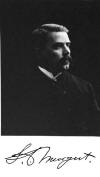
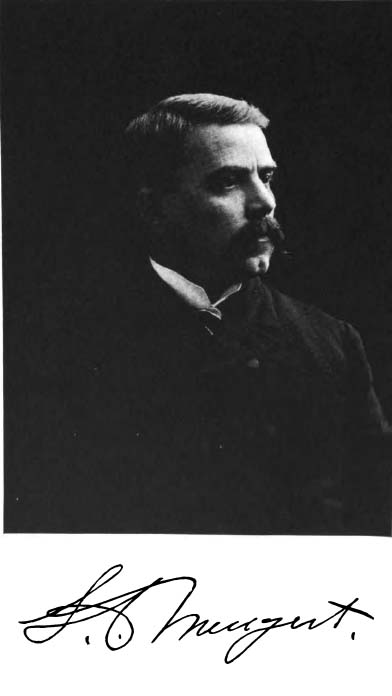
L. C. Mengert |
|
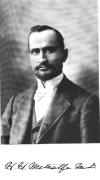
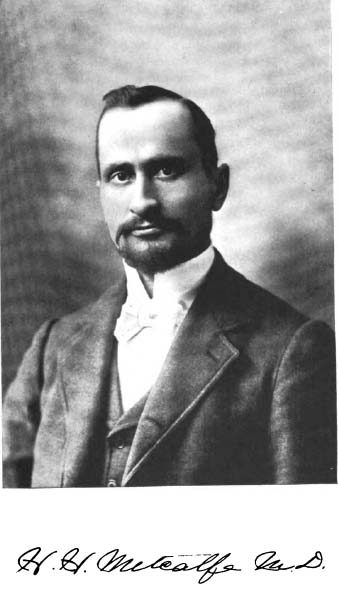
H. H. Metcalfe |
|
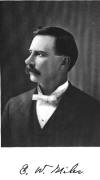
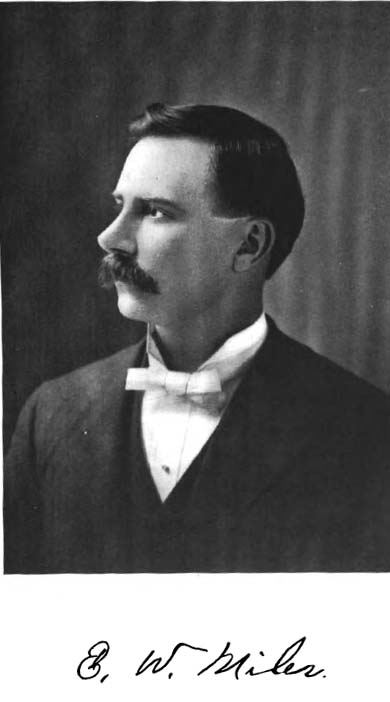
E. W. Miles |
|
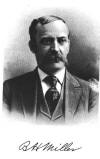
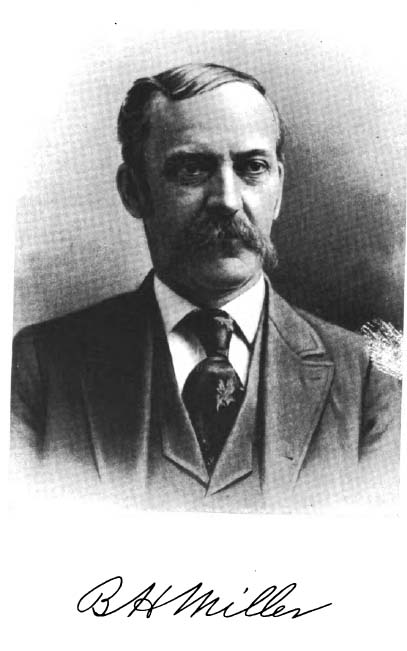
B. H. Miller |
|
| |
CHARLES S. MOORE.
Among the progressive and enterprising young business men of
Shelby, Ohio, no one is either better or more favorably known
than Charles S. Moore,
the subject of this sketch. He is one of the proprietors
of the Shelby Daily Globe, a “non-partisan expounder of the
news,” a new enterprise which has won the approbation of the
public.
The birth of Mr. Moore took place in Shelby
Sept. 2, 1874, a son of Wallace and Fanny (Beelman) Moore,
both natives of Ohio, the former a son of George and Rosanna
(Smiley) Moore. The father of our subject is a farmer
in Richland county, where he resides, enjoying the esteem of
all. Ten children were born to Mr. and Mrs. Moore,
as follows: Rosanna, who married Dr. Franklin
Keeler, of Appalachia, North Carolina; Elizabeth,
who died in 1897; Edith, who is now a teacher in Shelby;
Catherine, James, Sarah, Whitney,
Benjamin H., Florence and John J.
Our subject obtained his education in the common
schools of Shelby, where he proved himself an apt and ardent
pupil, and in 1889 he entered the office of the Shelby Free
Press to learn the trade of printer, in 1891 engaging with the
Galion Daily Leader, an enterprising and successful news paper
printed at Galion, Ohio, remaining with it until 1893. A
former resident of Shelby he became the owner of a journal at
Atchison, Kansas, well known through the state as the Atchison
Daily Patriot, and Mr. Moore became identified
with that paper until 1895.
The year 1896 was spent by our subject in travel
through the south, and upon his return, with renewed health and
broadened mind, he accepted a position with the Shelby
Semi-weekly Republican, later with the Shelby News and the
Sheets Printing Company, remaining four years, during which time
the practical knowledge of the methods of conducting a
successful publication became thoroughly known to him.
The progressive citizens of Shelby desired a daily
paper and appeared to Mr. Moore to be willing to
support a good one. On Feb. 1, 1900, he entered into a
partnership with J. C. Stanbaugh, a son of S. F.
Stanbaugh, the editor of the Atchison Patriot, and a
business was inaugurated for printing in all its details,
meeting with so much encouragement that on Apr. 24, 1900. our
subject and partner issued the first number of the Shelby Daily
Globe, a bright, newsy little journal, which attracted favorable
notice from the press of the state and soon had a circulation of
nine hundred, this being very gratifying, as that number insured
its success.
The partners in this enterprise are men well qualified
to conduct it, Mr. Moore succeeding in all outside
work, his genial, pleasant personality and undoubted energy
enabling him to interest the public, while the gifts of Mr.
Stanbaugh fit him for the office work. The friends
of the energetic young firm are pleased with their bright future
and the press has warmly welcomed them into the fold of
journalism.
Our subject is a stanch Republican, active in the ranks
of his party, although he is politic enough to permit each man
to express his own views. Socially he is connected with
the K. of P. and the Modern Woodmen.
Source: A Centennial Biographical History of Richland Co., Ohio
- Publ: Mansfield by A. A., Graham & Co. - 1901 - Page 503 |
|
|
GEORGE H. MOWRY.
George H. Mowry, who quietly resides on his farm
in Monroe township, was born on the 11th of October, 1842, in
the township which is still his home, his parents being,
Jacob and Catherine (Crone) Mowry He represents one of
the old pioneer families of the state and is of Holland lineage.
His great-grandfather was born in the land of dikes and became
the founder of the family in the new world. Jacob
Mowry, the grandfather of our subject, was a native of
Franklin county, Pennsylvania, and in the '40s came to Ohio in a
covered wagon. He purchased one hundred and sixty acres of
wild land in Monroe township, the property which now belongs to
the family of Adam Mowry, and there he gave his
attention to agricultural pursuits until called to his final
rest. He voted with the Democracy and was a member of the
Lutheran church. Wherever he was known he was
esteemed for his genuine worth.
Jacob Mowry, the father of our subject, was born
in Franklin county, Pennsylvania, and in 1820 accompanied his
parents on their removal to this state. Upon the home farm
he continued until his marriage to Miss Catherine Crone,
who was born in Hagerstown, Maryland, about 1818, a daughter of
John and Catherine (Pentz) Crone. Her father was a
blacksmith of Baltimore, Maryland, for many years, and removed
thence to Hagerstown, where he lived until his emigration to
Ohio. Oncoming to this state he settled on a farm of
eighty acres, two and a half miles southeast of Lucas.
There he spent the remainder of his days and conducted a shop in
connection with his farming operations for many years. He
served as an officer in the war of 1812, and was one of the
reserves at Fort Henry. near Baltimore. when that fort was fired
upon by the British. He attained the advanced age of about
eighty-six years. After their marriage Mr. and Mrs.
Jacob Mowry spent about two years on a farm near Lucas and
then removed to the Jesse Swan farm in
Monroe township, where they remained for twelve years. In
1857 they took up their abode on the Culler farm
in Mifflin township, Ashland county, where Mr. Mowry
remained until 1872. He then located on his farm of
seventy-five acres in Vermilion township, Ashland county, having
acquired that property some years previously. It is still
his place of residence and is one of the most highly improved
tracts of land in this section of the state. He has held
various township offices, being elected on the Democratic
ticket. He is a member of the Lutheran church and a man of
the highest respectability. Unto Mr. and Mrs. Mowry
have been born nine children, of whom seven are living, namely:
George H.; Samuel, who is a carpenter and
contractor of Mansfield, Ohio, and has built many of the
churches and most prominent buildings there; Maria, the
wife of John Wilson, a farmer of Ashland county,
Ohio; John M., an agriculturist of Mifflin township,
Richland county; Ursula, the wife of William
Kelley, a hardware mer chant of Hayesville, Ohio; James
N., who follows farming in Ashland county; and Ellen,
at home.
In taking up the personal history of George H. Mowry
we present to our readers the life record of one who is widely
and favorably known in Richland county. His boyhood days
were spent in the acquirement of his education in the common
schools, to the pleasures of youth and to the duties that fall
to the lot of farmers' sons. At the age of twenty-two he
secured employment in a sawmill and for three years followed
that business in Richland, Holmes and Wayne counties. In
1867 he went to Michigan, spending the summer in the pineries,
where he was employed in the operation of a sawmill and also
aided in building a mill. In the autumn of the same year
he reurned returned to Richland county and was
married. He then located on his present farm of one
hundred and sixty acres and in pursuit of for tune has followed
farming. In 1876, however, he met with an accident which
crippled him somewhat, and for sixteen years he engaged in
business as an agent of the Pharnix & Hartford Fire Insurance
Company in Richland and Ashland counties. He has since
lived quietly upon his farm, his land being rented, and the
income from the place supplies him with all the necessaries and
many of the comforts of life. For a number of years he has
been writing for various publications and at present is a
contributor to the Londonville Democrat and to the Mansfield
Shield and Banner.
In the autumn of 1877, Mr. Mowry was united in
marriage to Miss Eleanor Culler. a native of Ashland
county, Ohio, and a daughter of Michael Culler.
He and his wife have many warm friends in this community and
enjoy the hospitality of the best homes in their section of the
county. In politics Mr. Mowry is a Democrat and in
religious belief is a Lutheran. He holds membership
relations with Mifflin Lodge, No. 306, Knights of the Maccabees,
and is one of the most highly esteemed residents of Richland
county, for his course has ever been straightforward and
honorable, commending him to the confidence, good will and
regard of those with whom he has been associated.
Source: A Centennial Biographical History of Richland Co., Ohio
- Publ: Mansfield by A. A., Graham & Co. - 1901 - Page 587-589 |
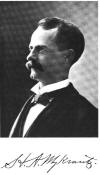
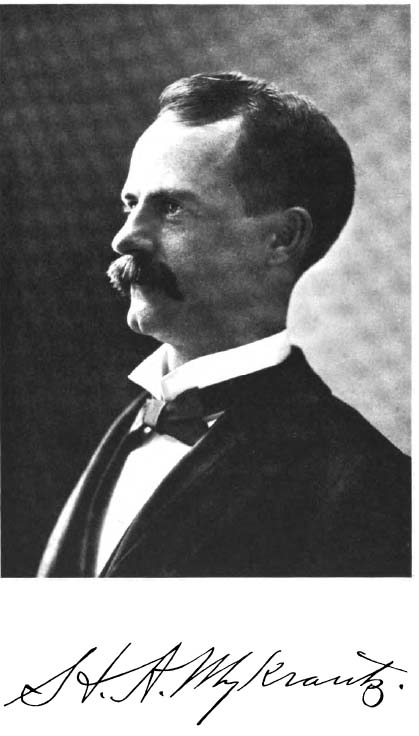
H. A. Mykrantz |
|
.
|
|
CLICK HERE to
RETURN to
RICHLAND COUNTY, OHIO |
CLICK HERE
to RETURN to
OHIO GENEALOGY EXPRESS |
|
FREE GENEALOGY RESEARCH is My MISSION
GENEALOGY EXPRESS
This Webpage has been created by Sharon Wick exclusively for Genealogy
Express ©2008
Submitters retain all copyrights |
|